Most “top 10 manufacturers” lists are written by the manufacturers themselves. This checklist is different: it is built from the questions our buyers ask us every week — and the red flags they share after bad experiences elsewhere.
Choosing an LED face mask manufacturer is not about finding the biggest catalog. It is about finding verifiable proof: owned designs, measured data, and a QC paper trail that survives your retail audit.
Use these ten checks on every supplier conversation. A manufacturer with real substance answers all ten in writing. Print this page and score each supplier yes or no.
Key Takeaway
Every claim a manufacturer makes should come with a way to verify it. “Trust us” is not a verification method.
The 10-Point Checklist
1. Are the molds owned or public?
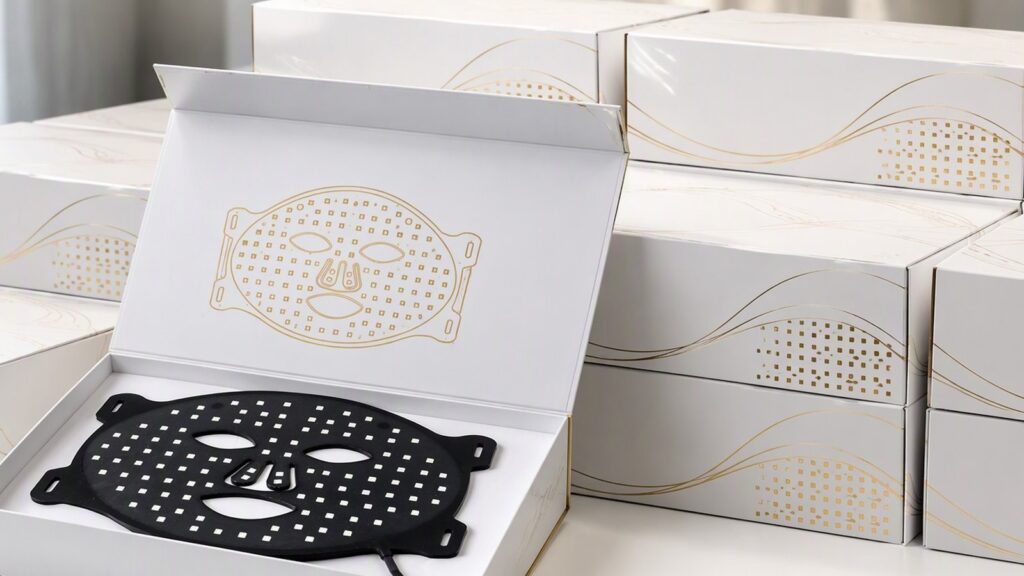
Ask whether the mask shells are proprietary tooling or open-market public molds. Public molds mean your “exclusive” product is already on forty other listings.
A good answer: named, owned molds with design patent numbers you can look up. Proprietary molds also mean lower infringement risk on Amazon and Temu.
Red flag: “Everyone uses this design” or no patent numbers on request.
2. Are wavelengths measured, with exact nanometer values?
“Red light technology” is not a spec. Ask for the measured nanometer value of every mode.
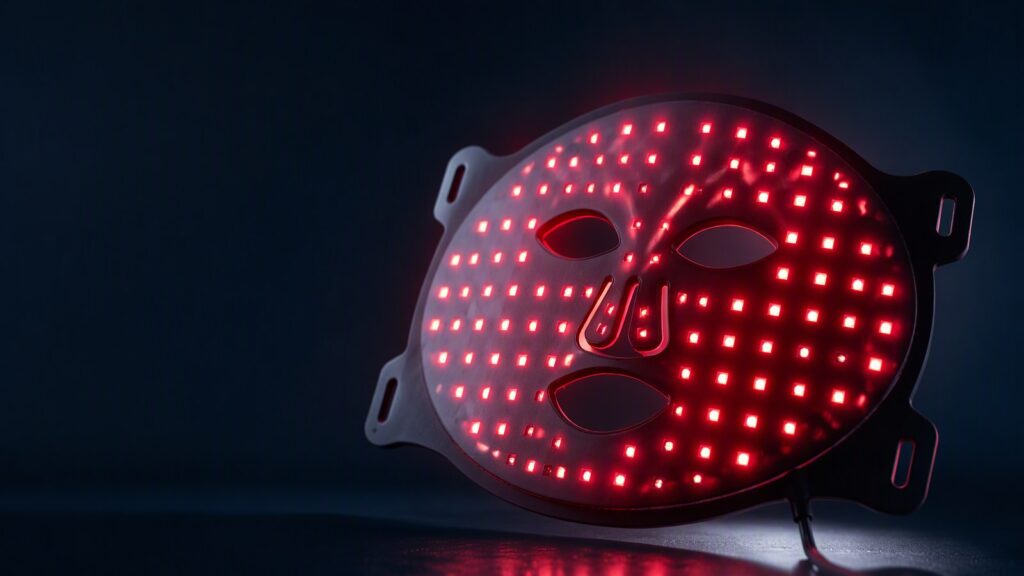
A good answer: one number per mode, measured on a spectrometer — for example 625 nm red, 520 nm green, 465 nm blue — shared in writing.
Red flag: ranges without measured values, or “multi-spectrum” with no numbers at all.
3. What is the measured irradiance, and per which batch?
Output drifts between LED batches. Ask for irradiance in mW/cm² and whether it is spot-checked per batch.
A good answer: a figure like 15–45 mW/cm² adjustable, with batch sampling records you can request. (Read our companion piece on wavelengths and output for what good numbers look like.)
Red flag: wattage quoted instead of irradiance, or “lab data” from a different model.
4. What does the QC protocol actually cover?
Every supplier claims “strict QC.” Few will list the steps.
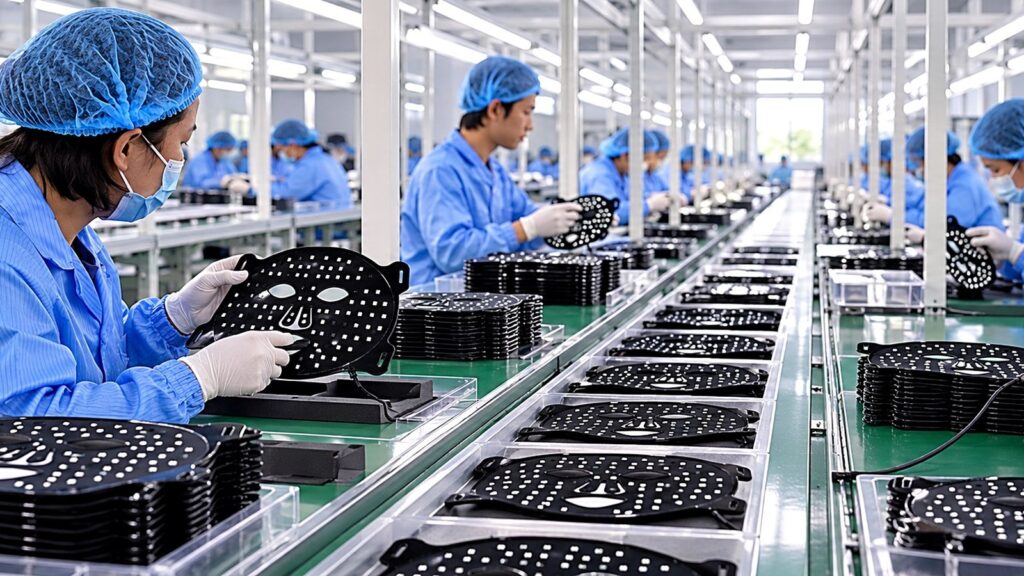
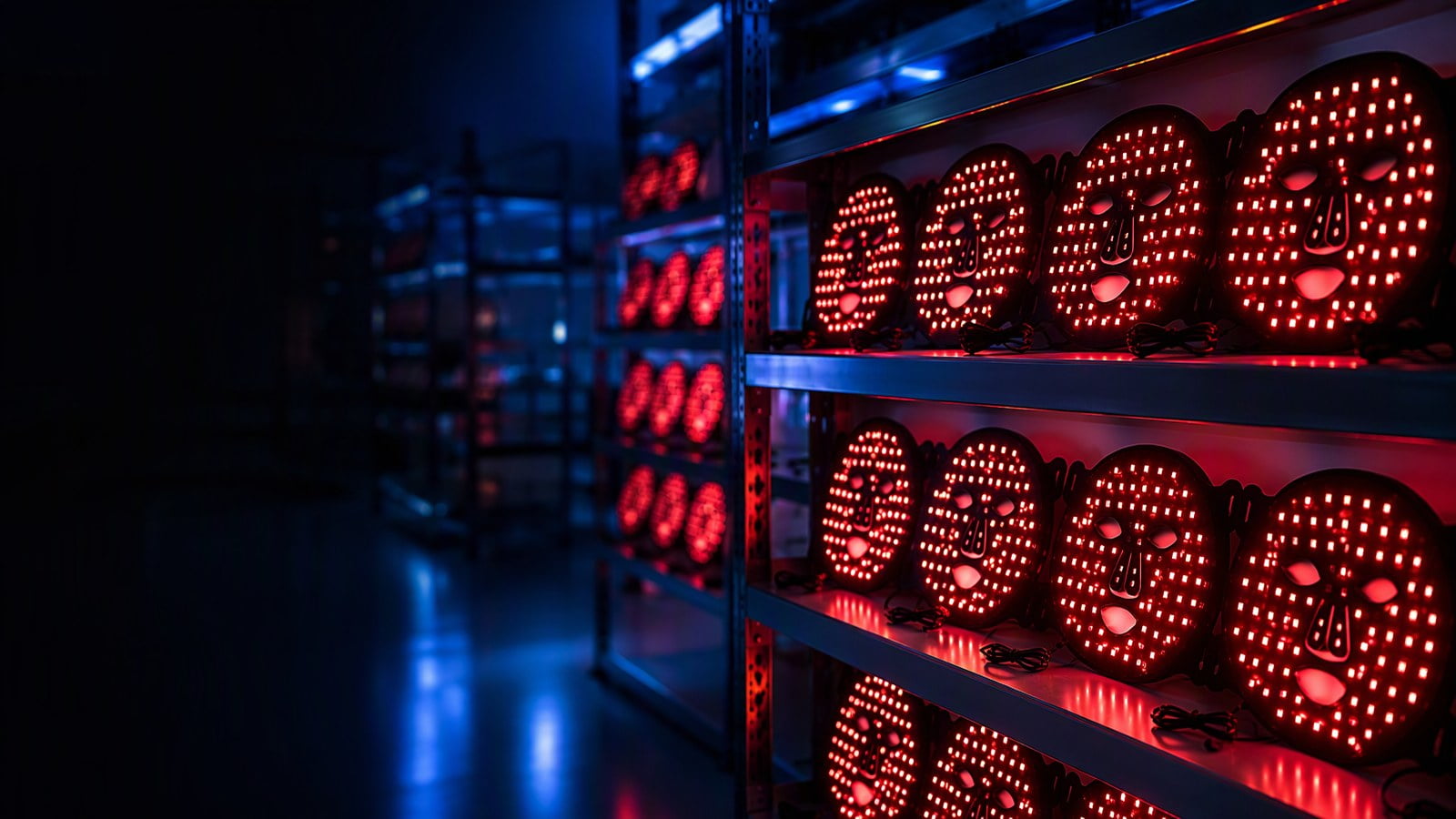
A good answer: a written protocol — for example, 100% powered aging tests, LED-by-LED light inspection, and controller function cycling — with batch records shipped alongside your order.
Red flag: “We check every unit” with no written protocol and no records.
5. Are compliance documents model-matched?
CE / FCC / RoHS files must match your exact model, not a sibling product from five years ago.
A good answer: model-matched documents sent with your quotation — before you pay anything.
Red flag: documents that arrive weeks after you ask, or certificates naming a different factory than the one producing your order.
6. What is the real MOQ for custom logo?
MOQ is where small brands get locked out of testing the market.
A good answer: custom logo from around 100 units, with a clear step-up for custom packaging. Standard models should be even more flexible.
Red flag: MOQs of 500+ with no sample middle ground.
7. How is the quoted lead time actually achieved?
“Fast delivery” is a promise. Semi-assembled stock is a mechanism.
A good answer: core models held semi-assembled, final assembly triggered by your order — which is how 7–15 day standard lead times are possible without cutting QC.
Red flag: long queues explained as “high demand,” or lead times that slip after the deposit.
8. What is the waterproofing and construction standard?
Water ingress is the number-one return driver for LED masks sold online.
A good answer: a rated construction — for example dual-layer liquid silicone sealing at IP63, built to resist sweat and splashes in daily use.
Red flag: no IP rating, or “waterproof” without a test standard behind it.
9. Can you verify everything before you pay?
Serious manufacturers welcome verification. Evasive ones delay it.
A good answer: samples available in about a week, plus a live video walkthrough of the production line, aging racks, and sample room on request.
Red flag: samples that take a month, or refusal to show the line on video.
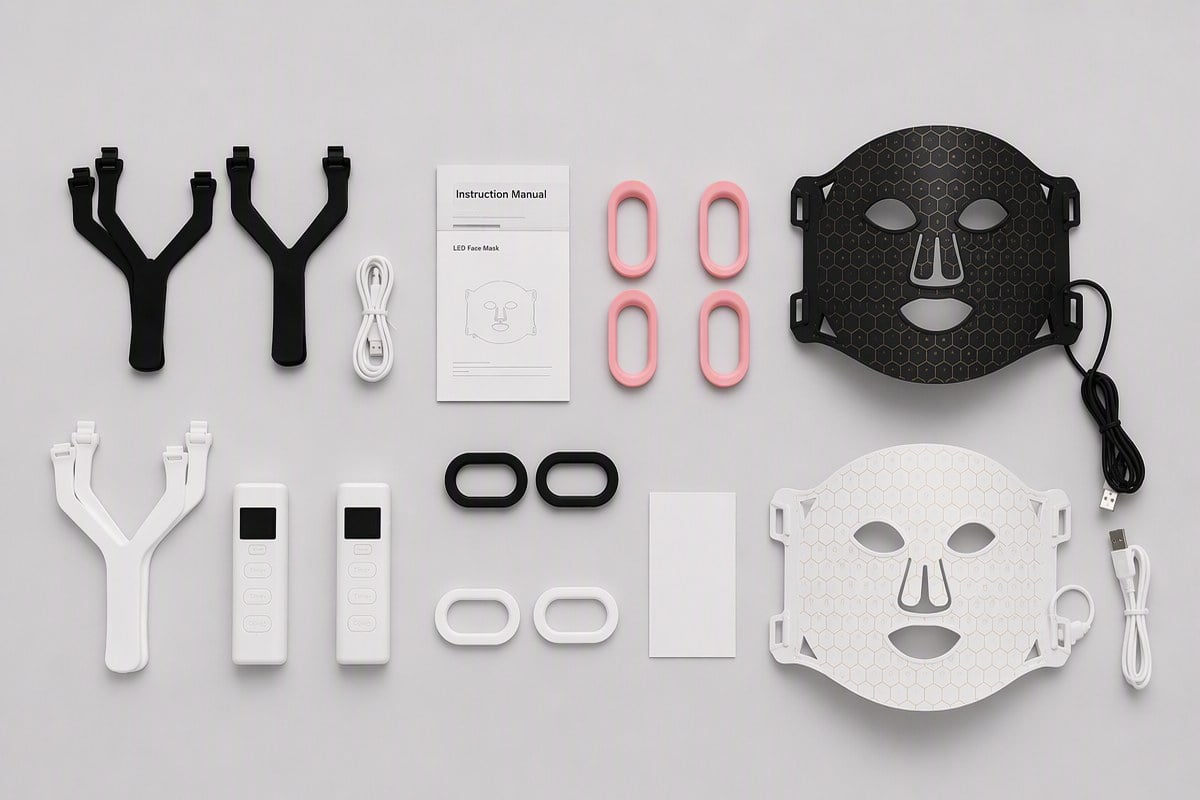
10. What happens when units arrive defective?
Ask the defect question before you need it.
A good answer: a written policy — for example, send a short video of affected units and replacements ship with your next order.
Red flag: “That never happens” as the entire warranty policy.
Key Takeaway
Score each supplier on all ten. Anything under eight yeses is a negotiation, not a partnership.
How We Answer These Ten Questions
Fair question — here is our own scorecard, in the same format:
- Owned molds: yes, proprietary tooling with 50+ design and utility patents
- Measured wavelengths: 625 / 520 / 465 nm core modes, NIR 1072 nm optional, measured in-house
- Irradiance: 15–45 mW/cm² adjustable, batch spot-checked, records on request
- QC protocol: 100% powered aging + LED-by-LED inspection + controller cycling, records per batch
- Compliance: model-matched CE / FCC / RoHS / UKCA files sent with your quotation
- MOQ: custom logo from 100 units; custom packaging from 500
- Lead time: 7–15 days standard, built on semi-assembled stock
- Construction: dual-layer liquid silicone, IP63
- Verification: samples in ~1 week, live video walkthrough on request
- Defects: video claim, replacements ship with your next order
You can see the QC protocol in detail on our capabilities page, or skip ahead and test us directly.
Frequently Asked Questions
How do I know if an LED mask supplier is a factory or a trader?
Ask for owned mold numbers, batch QC records, and a live video walkthrough of the production line. Trading companies can show catalogs; only manufacturers and brand owners with real tooling can show molds, records, and lines.
What is a good MOQ for LED face masks?
For custom logo orders, around 100 units is a workable small-brand entry point. Anything above 500 with no sample path makes market testing expensive.
Should I ask for FDA clearance from an LED mask manufacturer?
Only if you are selling into regulated medical channels with a specific 510(k) requirement. For general beauty retail, model-matched CE / FCC / RoHS documentation is the standard ask — and any supplier claiming FDA status should be able to show the actual clearance letter.
How long should sampling take?
About a week is normal from manufacturers holding semi-assembled stock. Longer sampling timelines usually mean the product is being built from scratch — or sourced from someone else.